User-agent: GPTBot Disallow: /

Switzerland in Photos: The Traditional Ticinese Village of Lavertezzo

The idyllic stone village of Lavertezzo in the canton of Ticino, Switzerland.

The idyllic stone village of Lavertezzo in the canton of Ticino, Switzerland.

This is the idyllic Swiss village of Lavertezzo in the canton of Ticino. Like so many Swiss villages, Lavertezzo has a long history. The village was first documented as Laverteze back in 1327, and for centuries the inhabitants lived a remote, migratory lifestyle. Nestled roughly 12 miles up the rugged Valle Verzasca from Locarno, we can imagine that travel to the village by mule and/or foot in bad weather was both peaceful and tough. Today, a comfortable Swiss bus makes the journey in about 30 minutes. Lavertezzo can be busy in the summer. The nearby double arch stone bridge, (built over 400 years ago), attracts visitors from all over the world. Typically, the visitors snap photos of the bridge, dip their toes in the refreshing Verzasca river, have lunch at a local osteria or ristorante in the village, and then return by bus or car to the south. That said, there are some really wonderful hikes in the area, and it’s easy to escape the crowds. One of our favorite hikes connects some really idyllic hillside villages in the valley. Plus, the bridge and the village of Lavertezzo are worth the trip. The visually stimulating buildings huddled around the 18th century church are made of stone. The hillside paths are romantically narrow and winding, and the language of the region is Italian.

Would you like to hike in Ticino, Switzerland? We can set up a village-to-village hike in Ticino. We also have a Swiss Alps Rail + Hike that samples Ticino and two other delightful regions in Switzerland. Check it out.
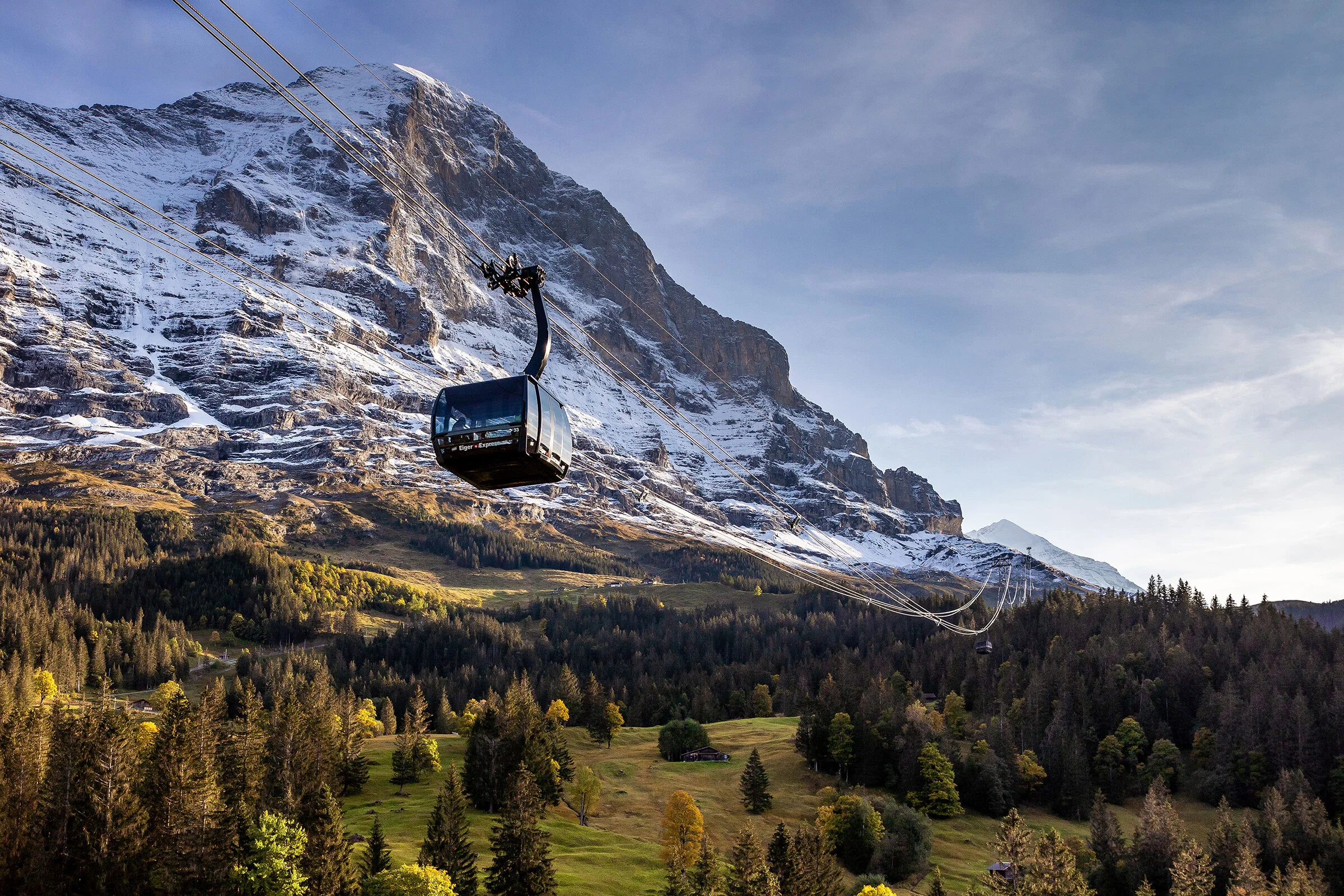
Thinking About Visiting the Top of Europe? The New Eiger Express Shaves 40 Minutes Off Your Trip!

Eiger-Express-Grindelwald-Eigernordwand-Weitansicht.jpg

The Jungfraujoch, also known by its moniker the “Top of Europe”, is the highest rail station in Europe and one of the premier touristic destinations in Switzerland. You can see photos from the Jungfraujoch by clicking our previous posts here, here and here. In the old days, a journey from the village of Grindelwald to the Jungfraujoch took about 90 minutes by cogwheel train. With the newly opened Eiger Express cable car, visitors can be happily snapping photos on the Top of Europe in 45 minutes.

This is a substantial time savings for visitors to the Jungfraujoch, but it’s the snow-lovers and hikers in Grindelwald that will really benefit. In the past, it took skiers and snowboarders about an hour to access the slopes at the base of the Eiger. Now, thanks to the Eiger Express cable car, they can access the same slopes in about 20 minutes.

Hikers, too, can now access the trails above Kleine Scheidegg in around 20 minutes. This is all part of the 470-million-Swiss-franc V-Cableway project which includes two new state-of-the-art cable cars and hyper-modern terminals at Grindelwald, Eigergletscher and Männlichen.

Would you like to experience the Eiger Express for yourself? Please contact us. It’s our pleasure to arrange your ski, hike or sightseeing vacation in Grindelwald. It’s our speciality!

Photo credit: Jungfrau Railways

Happy New Year from The Cat & The Peacock!

Saint Sebastian Ramsau.jpg

Happy New Year from The Cat & The Peacock! We wish you and yours much happiness, good health and peace on this New Year’s Eve, and we hope to see you in the Alps in 2021. We’re so grateful for each and everyone one of you!

Photo: The parish church of St. Sebastian in the village of Ramsau bei Berchtesgaden—Bavarian Alps, Germany.

Recipe: Fondue Moitié-Moitié—The Classic Cheese Fondue of the Swiss Alps

Swiss cheese fondue.jpeg

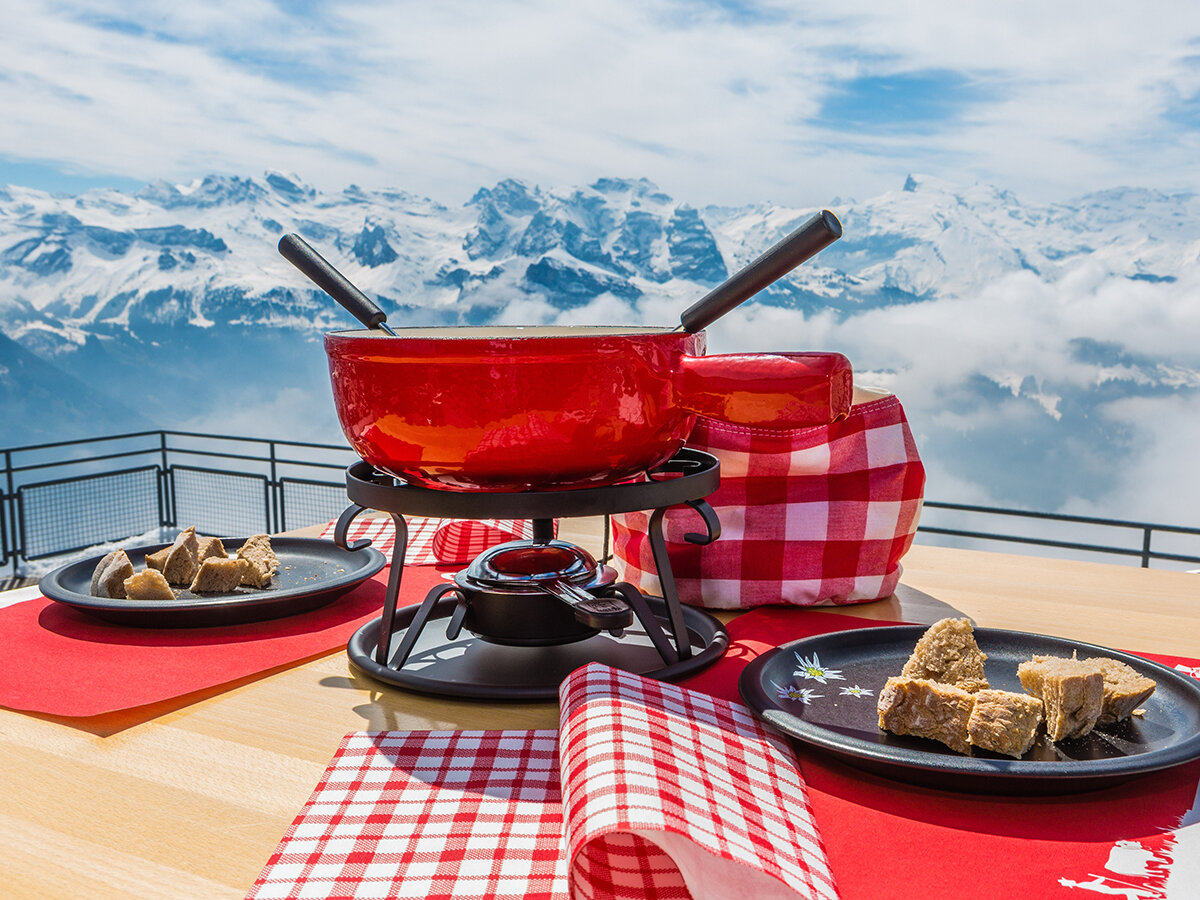
One of my favorite Swiss fondues is called fondue moitié moitié (fondue half and half). This cheese fondue heralds from the bilingual French and German-speaking canton of Fribourg in the western part of Switzerland. Fondue moitié moitié consists of equal parts Gruyère cheese and Vacherin from Fribourg. Served with diced up crusty rustic bread, it’s delicious! If you’re looking for a true Swiss fondue with a distinctive taste of the Alps, this is it! 

Recipe: Fondue Moitié-Motié

Ingredients

  • 600 g (21 oz) white bread (A crusty artisan French boule or baguette is the best.)

  • 2 cloves of garlic

  • 1 tbsp corn starch

  • 1 small glass, 30 ml (1 oz) Kirsch

  • 300 ml (1.25 cups) dry white wine (Use a Fendant made from the Chasselas grape or a similar light, dry white.)

  • 300 g (10.6 oz) coarsely grated Gruyère cheese (Make sure it’s aged Gruyère from Switzerland.)

  • 300 g (10.6 oz) coarsely grated Vacherin Fribourgeois

  • 1 dash of freshly ground pepper

  • Optional: 1 Egg

Fondue Time!

  1. Prepare: Cut half of the bread into cubes (approx. 2 cm thick) and place in a large serving basket or bowl. Peel the garlic cloves. Grate the cheese if you haven’t done so already. Pour the kirsch and corn starch into a glass and whisk together until evenly diluted.

  2. Make: Generously rub the inside of a large fondue pot (called a caquelon) with one clove of garlic. Coarsely chop both cloves. Warm the wine in the fondue pot. Don’t boil the wine. Heat to just below boiling when bubbles begin to form. Slowly add the garlic and grated cheese (one handful at a time) to the fondue pot, stirring continuously to melt the cheese. Add the kirsch / corn starch mixture and stir until the fondue is melted evenly—about the consistency of heavy cream. Lightly season with pepper.

  3. Serve: Light up the burner on your fondue set and place the simmering fondue pot on top. Use long fondue forks to dip the bread cubes into the gooey goodness. Feel like going medieval? Break off pieces of the uncut bread and dip the bread into the fondue by hand. Make sure to stir the base of the fondue pot continuously to avoid burning. Scraping the bread along the bottom with your fork is a good technique, but don’t drop the bread!

  4. Enjoy: If everything goes to plan, then you’ll notice a brown layer of crusty, caramelized cheese on the bottom of the caquelon. French speakers call this crusty ring la religieuse, and indeed, eating it can be a heavenly experience. Just scrape it out of the pot and enjoy. Some Swiss break an egg in the bottom of the fondue pot and stir it in with the cheese to help remove the remaining bits. The result is a cheesy scrambled egg of sorts that helps clean out the caquelon. It’s delicious, but not all regions in Switzerland follow this tradition. Try it and see if you like it.

Wine Pairing: Pour a glass of the same Fendant used to prepare the dish or a similar light dry white wine. A small glass of Schnapps tastes good too! Avoid water and beer. Hot tea is fine.

Cheese Substitutes: Swiss Gruyère is a popular cheese, you shouldn’t have trouble finding it. Vacherin can be difficult to find. Substitute Fontina, a smooth melting cheese from the Val d’Aosta in Italy. Fontina, being Italian, is not traditional for fondue moitié-motié but it’s a good substitute. To stay true to Swiss roots, use Appenzeller or Emmentaler cheese. Both are good melting cheeses. 

Bon App!  

How about enjoying an authentic fondue during your inn-to-inn Swiss hike, Swiss ski & snowboard adventure, or scenic train trip in the Swiss Alps. Please contact us. We’re Switzerland Travel Experts!

Traveling From Zürich to Interlaken? Visit a Swiss Castle and Ride a Historic Lake Steamer During Your Trip

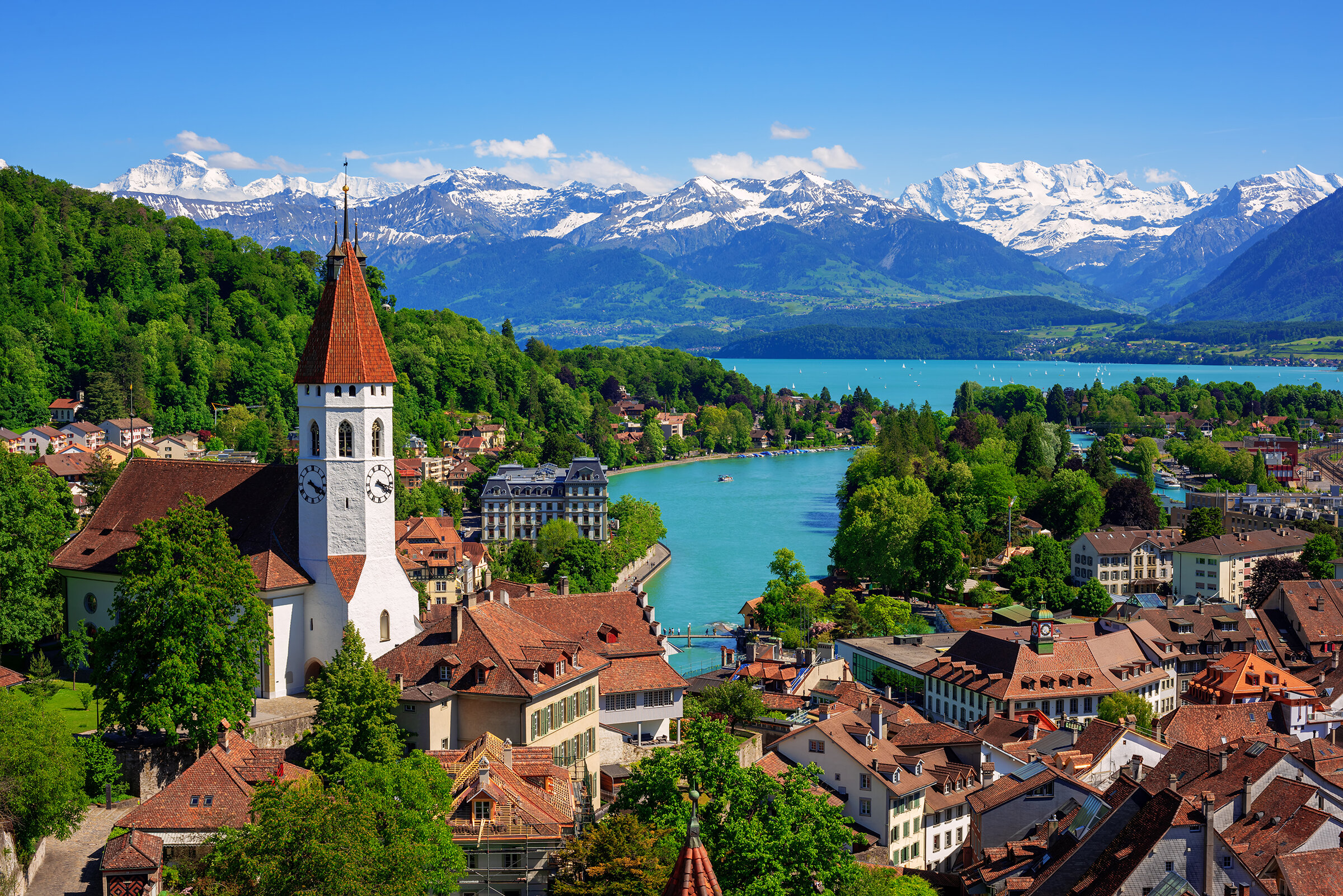
The historic Swiss city of Thun with the snow capped mountains of the Berner Oberland in the background.

The historic Swiss city of Thun with the snow capped mountains of the Berner Oberland in the background.

Here’s a Swiss travel tip for exploring the Berner Oberland region of the Swiss Alps. When you’re traveling from Zürich to Interlaken, consider hopping off the train in Thun, exploring a castle or two, and then riding a historic lake steamer the rest of the way.  

Thun Castle (Schloss Thun) built in the late 1100s, keeps watch over the Rathausplatz.

Thun Castle (Schloss Thun) built in the late 1100s, keeps watch over the Rathausplatz.

Details: 

One of the fastest and most convenient ways to travel from Zürich to Interlaken is by train. At the time of this writing, the transfer from the Zürich Hauptbahnhof (main station) to Interlaken West takes 1h 49 min with one change in Bern. From Bern, the train heads southeast toward the town of Thun and then scoots along the southern shore of the Thunersee before arriving in Interlaken. 

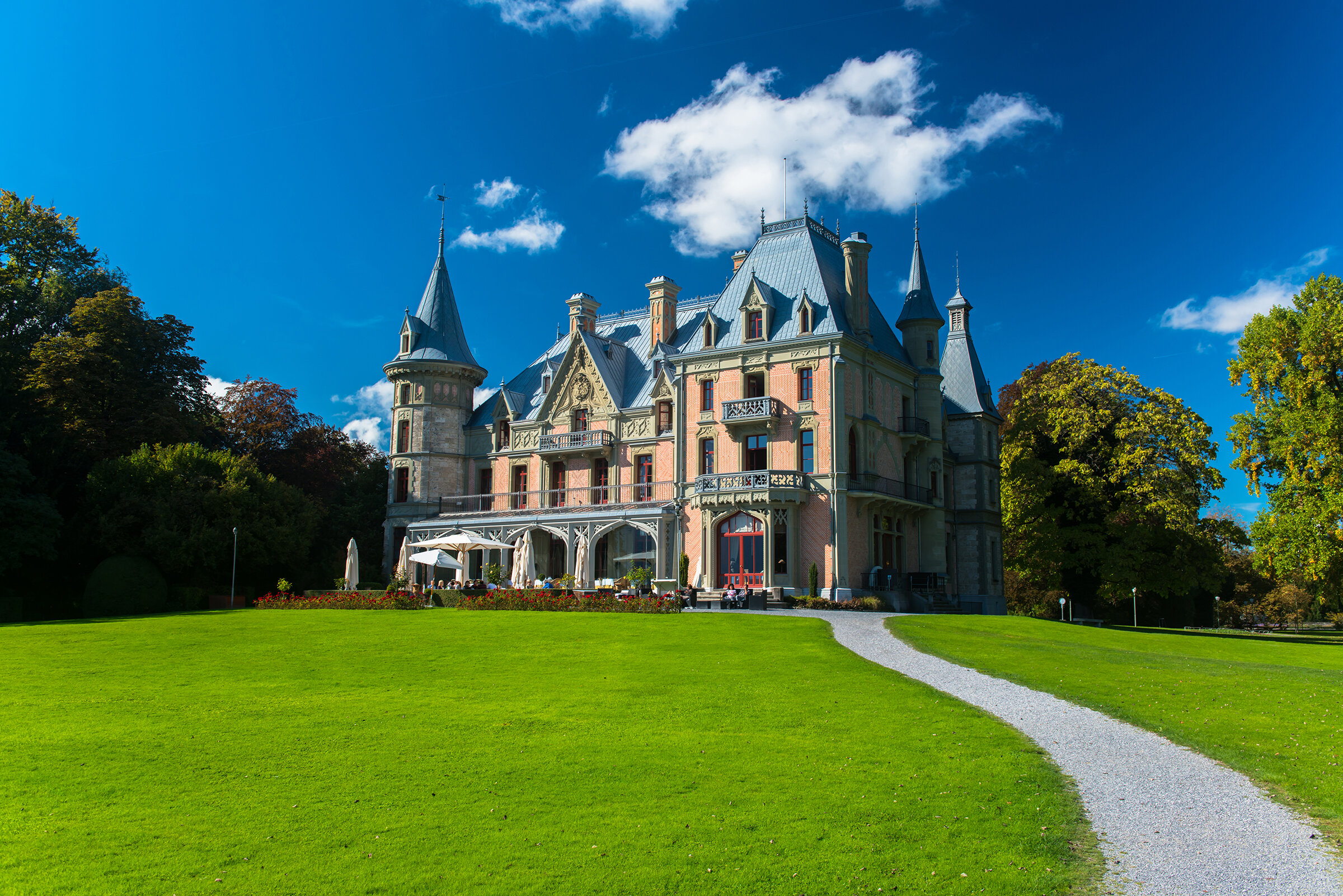
To add style to your trip, consider hopping off the train in Thun, visiting a castle or two, and then riding a historic paddle wheel steam ship the rest of the way to Interlaken. There are two castles in Thun—Schloss Thun and Schloss Schadau. Feeling like royalty? You can dine and spend the night at Schadau Castle. We recommend it!

Schadau Castle (Schloss Schadau) built in the mid 1800s on Lake Thun.

Schadau Castle (Schloss Schadau) built in the mid 1800s on Lake Thun.

Here’s a sample itinerary. 

Depart Zurich at 08:02 am.

Arrive in Thun at 09:24 am (Direct connection with no changes!)

Stash your luggage and walk over to Schloss Thun (Thun Castle). 

The castle is open every day during the summer at 10:00 am. 

After visiting the castle…

Hop on the historic paddle wheel steamer Blümlisalp for a 12:40 pm departure. You’ll arrive in Interlaken West at 02:49 pm.

The Blümlisalp paddle wheel steamer (built in 1906) has a restaurant on board so you don’t have to worry about lunch. The views of the mountains, castles, and lakeside villages will knock your socks off while you eat! There are five fairy tale castles on Lake Thun which you’ll get to see as you ply the turquoise waters.

You’ll also pass by quintessentially Swiss villages with picturesque church steeples. There are 12 churches on Lake Thun that are 1,000 years old! 

Oberhofen Castle (Schloss Oberhofen) on Lake Thun dates to the early 13th century and houses a living history museum. The lake steamers dock at Oberhofen, passing directly in front of the castle and affording incredible views.

Oberhofen Castle (Schloss Oberhofen) on Lake Thun dates to the early 13th century and houses a living history museum. The lake steamers dock at Oberhofen, passing directly in front of the castle and affording incredible views.

Oberhofen and Spiez are two of my favorite stops along the way. The castle in Oberhofen is delightful to photograph, and Spiez is one of the prettiest lakeside villages in Switzerland. If you can’t make it to Thun, then consider hopping off the train in Spiez and visiting Spiez Castle and the historic church there instead. The midday steam ship departs Spiez at 01:28 pm for arrival in Interlaken at 02:49 pm.

Spiez, one of the prettiest lakeside villages in Switzerland. The church is 1,000 years old and portions of the adjacent castle walls and the keep are 800-900 years old. This is the view looking down from the castle tower.

Spiez, one of the prettiest lakeside villages in Switzerland. The church is 1,000 years old and portions of the adjacent castle walls and the keep are 800-900 years old. This is the view looking down from the castle tower.

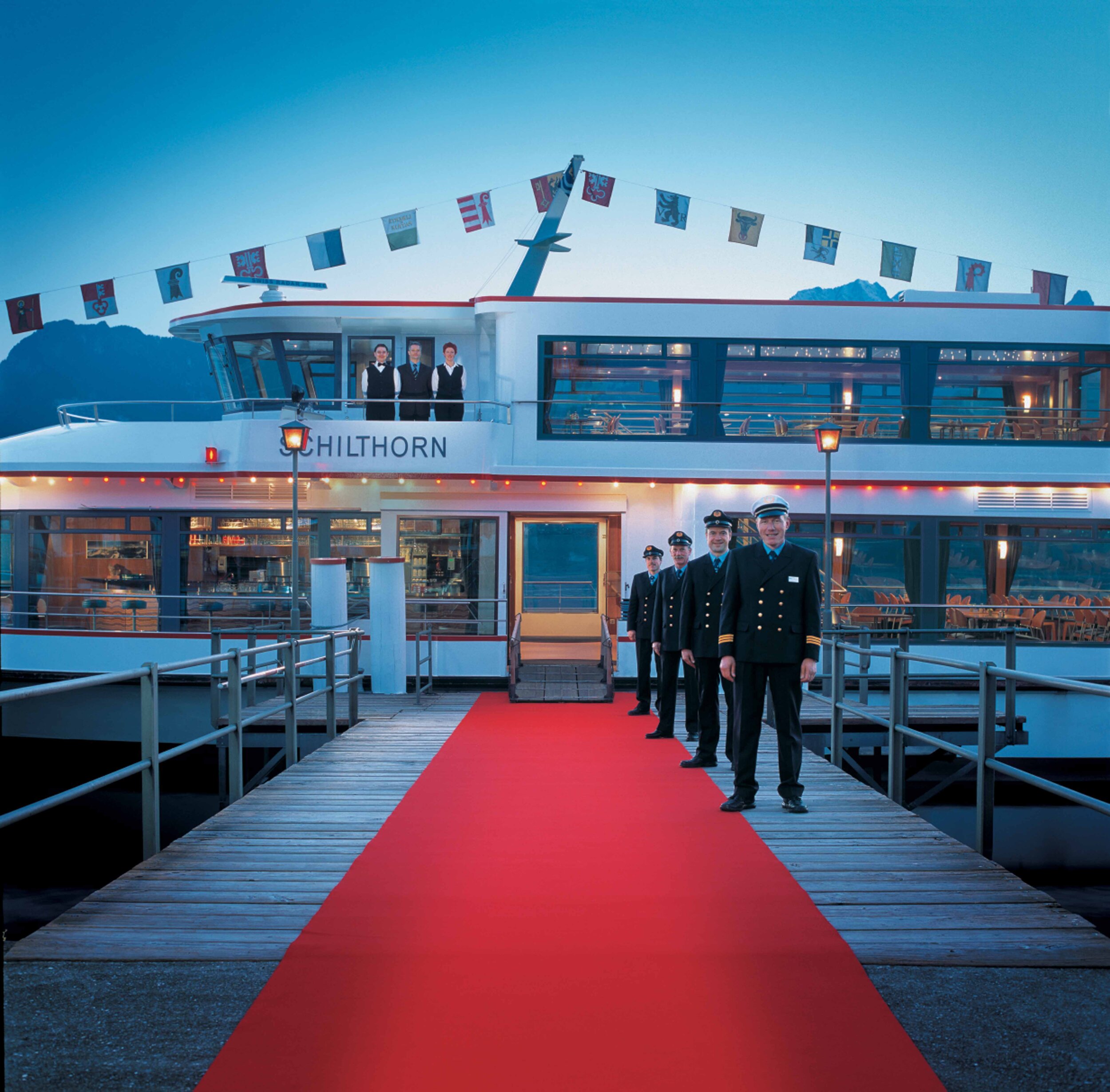
Are you a romantic type? How about a sunset cruise on Lake Thun? We’re happy to help you arrange it. Photo credit: BLS Ltd.

Are you a romantic type? How about a sunset cruise on Lake Thun? We’re happy to help you arrange it. Photo credit: BLS Ltd.

Note: This is the summer 2021 schedule (assuming no COVID shutdowns). Other boats depart somewhat hourly throughout the day from 08:40 am to 6:40 pm. Please contact us for the most up-to-date schedule and options.

This excursion pairs well with our Berner Oberland Inn-to-Inn Hike

Tschüss!